
Ubiquiti UniFi Dream Router 5G Max (UDR-5G-Max-EU)
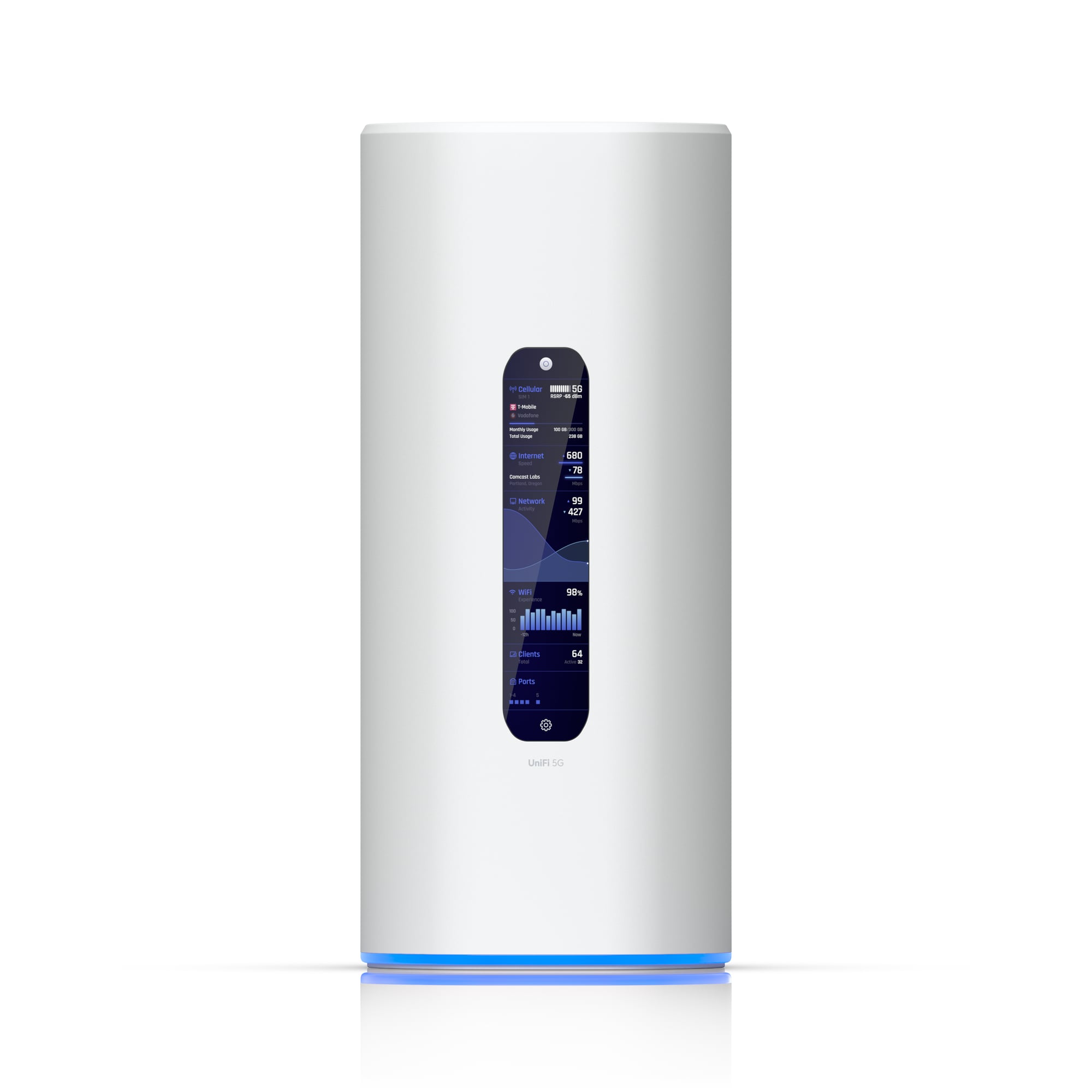
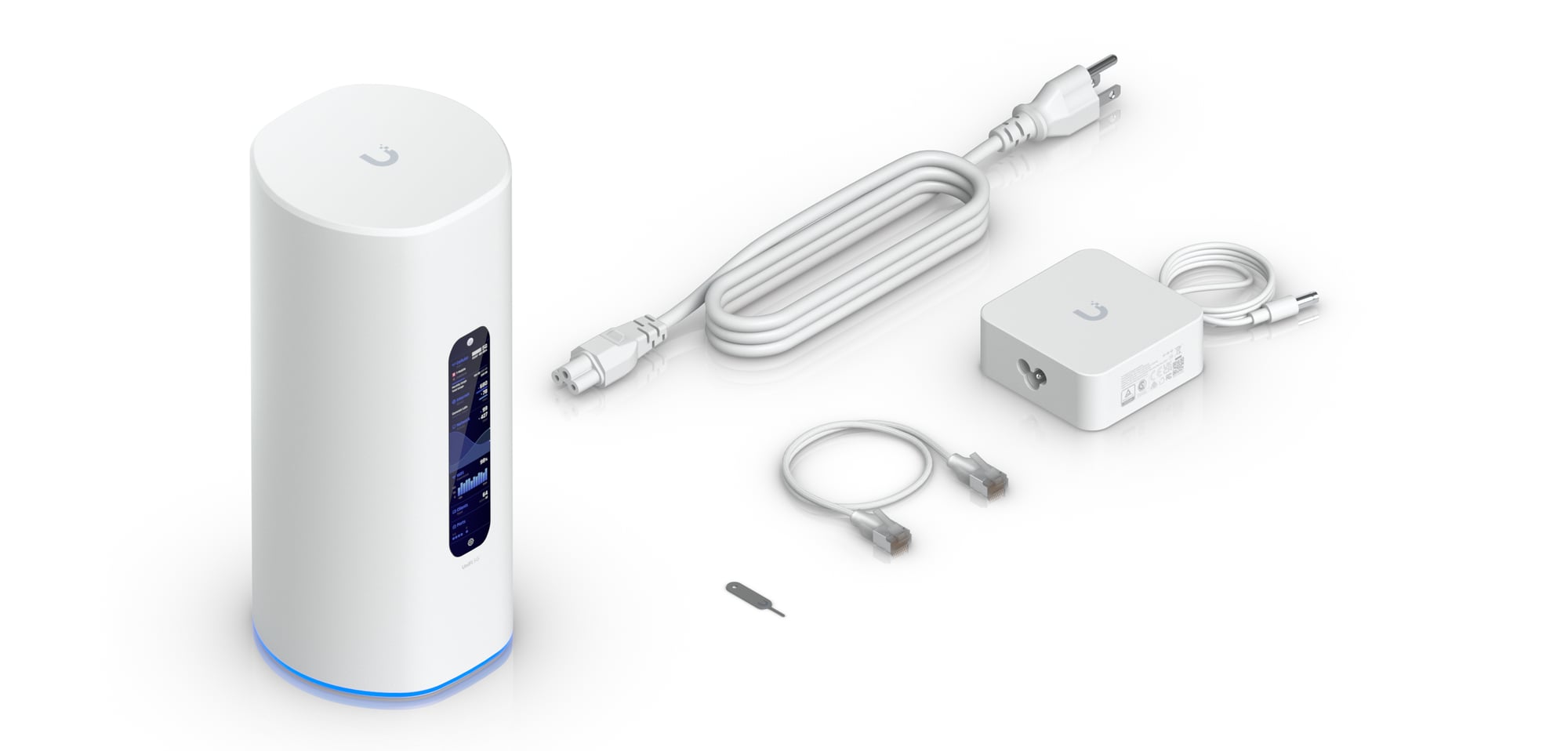
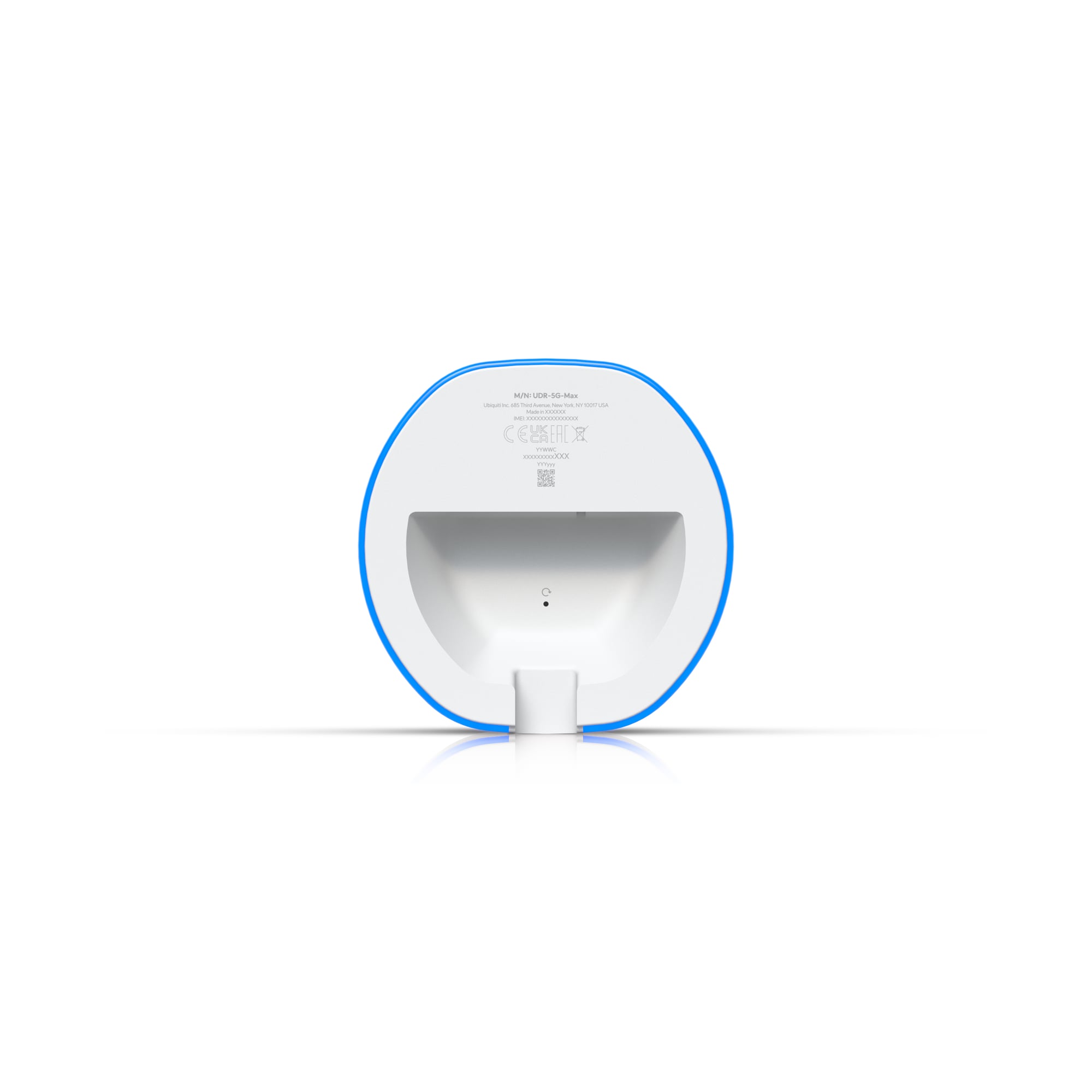
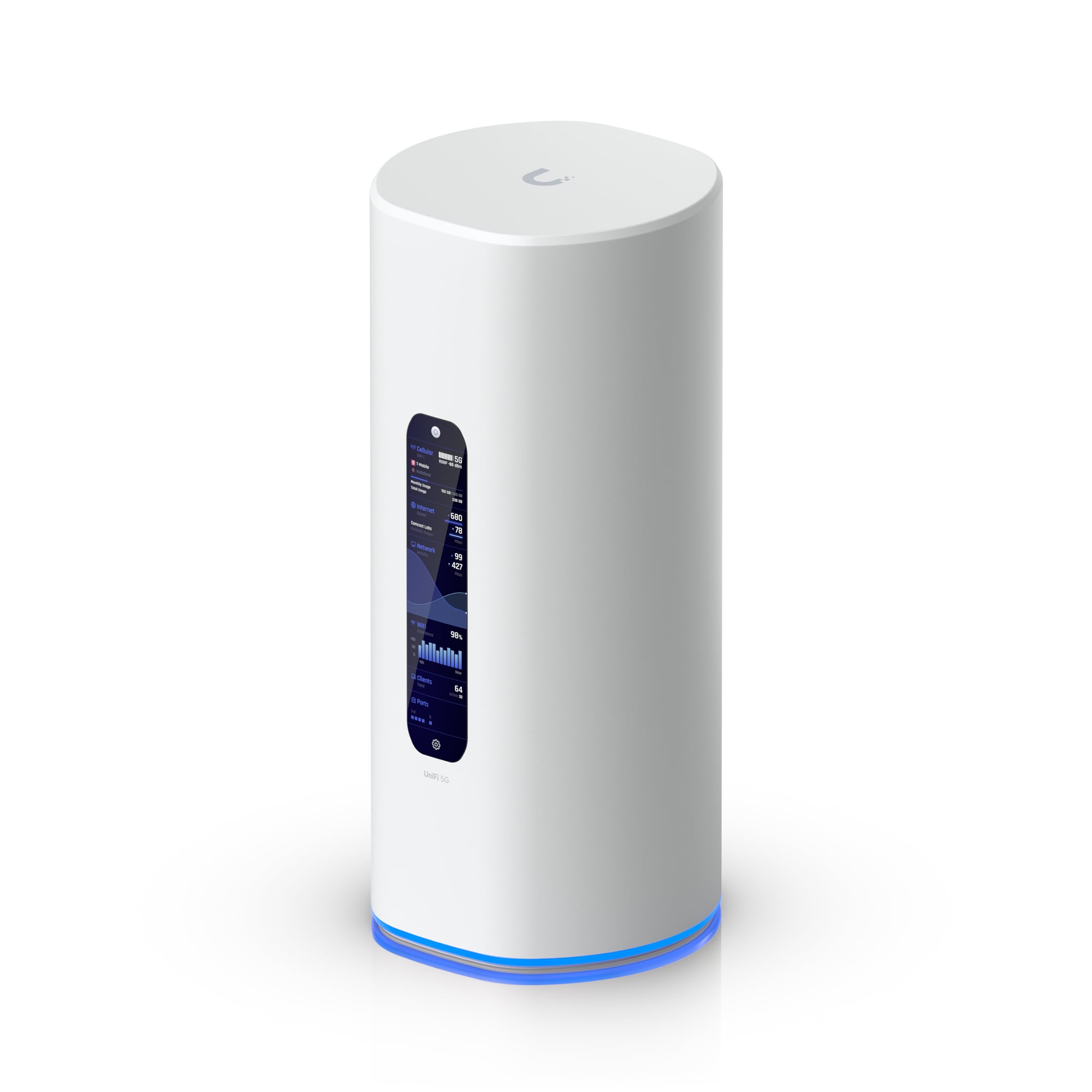
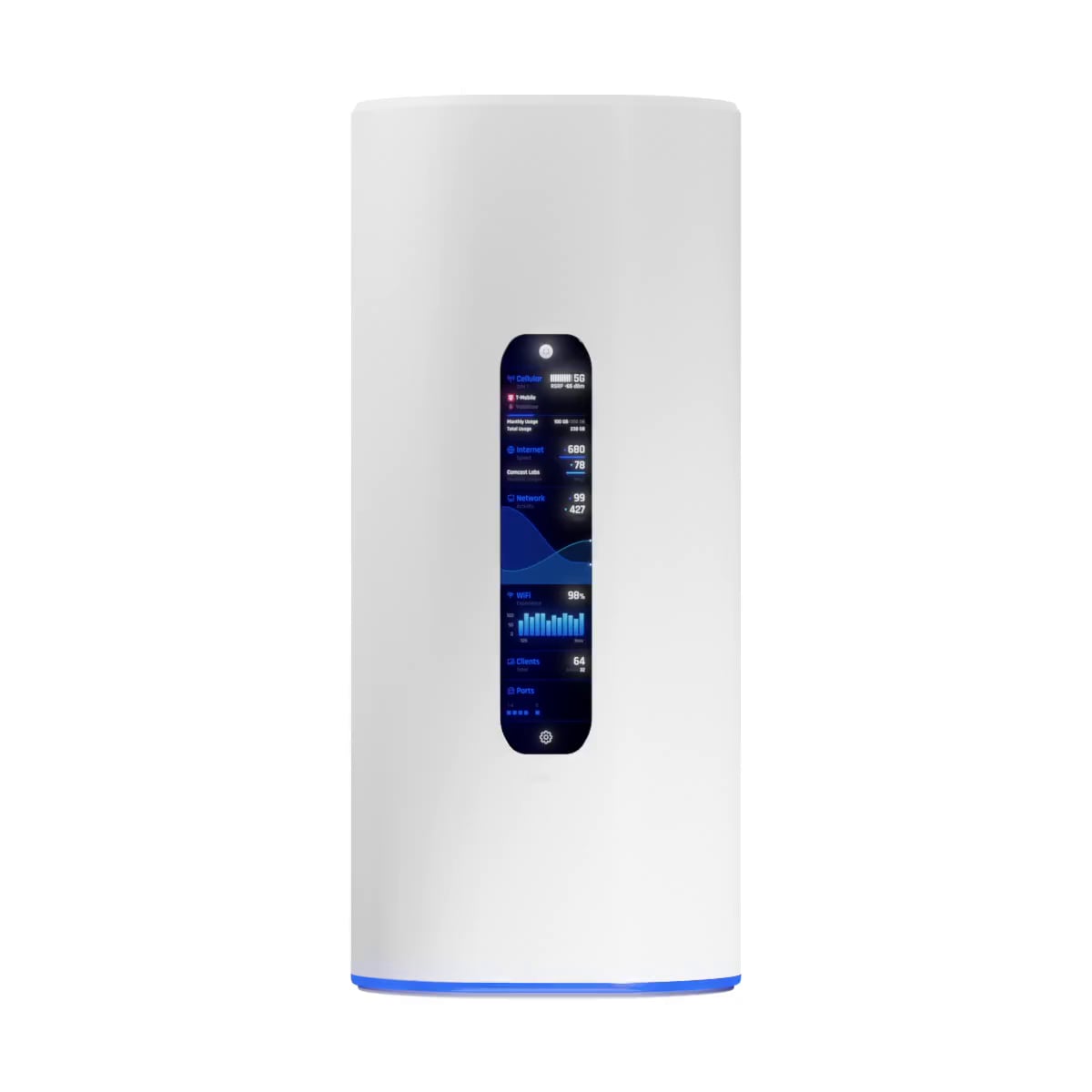
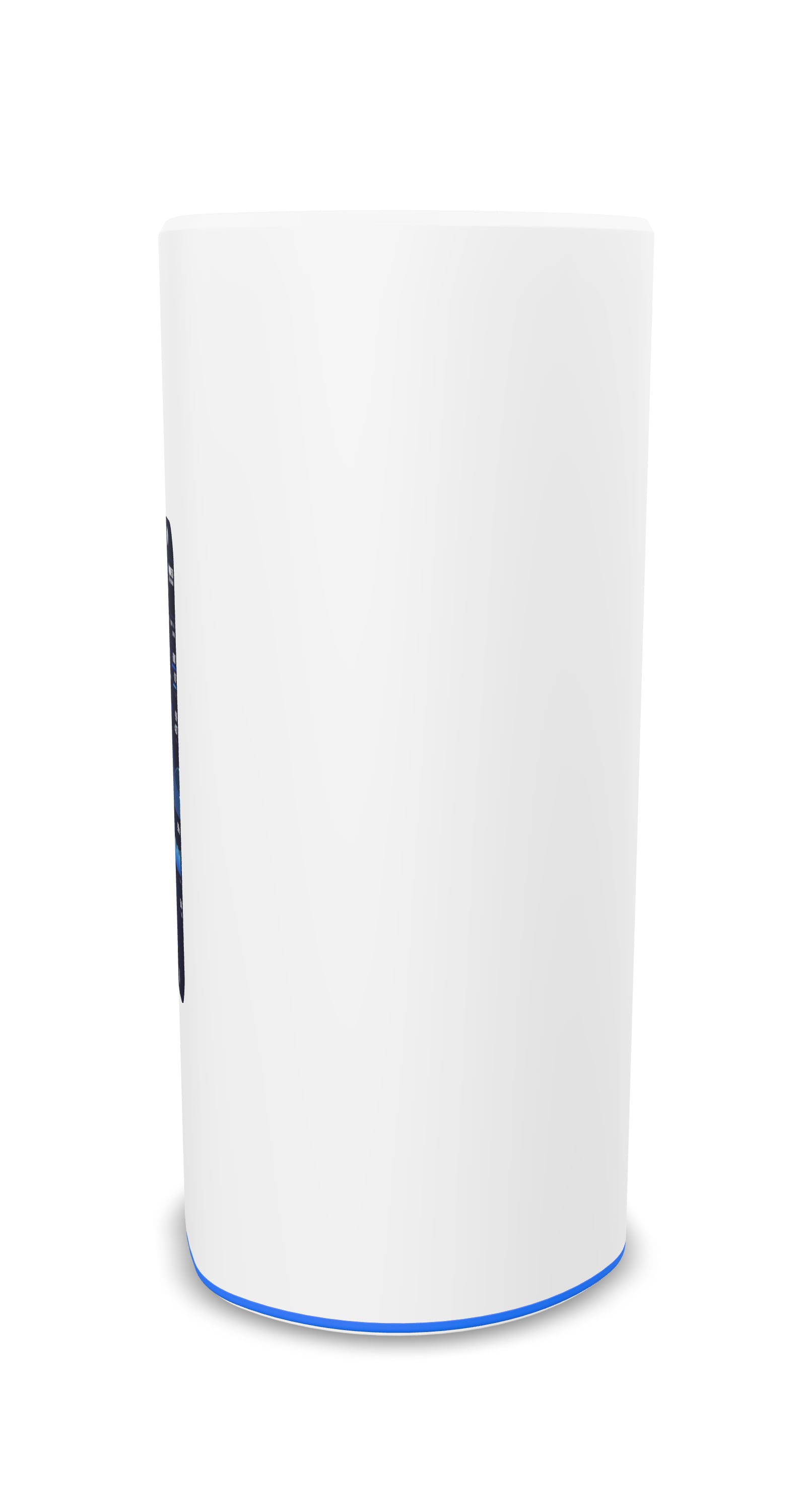
Ubiquiti UniFi Dream Router 5G Max (UDR-5G-Max)
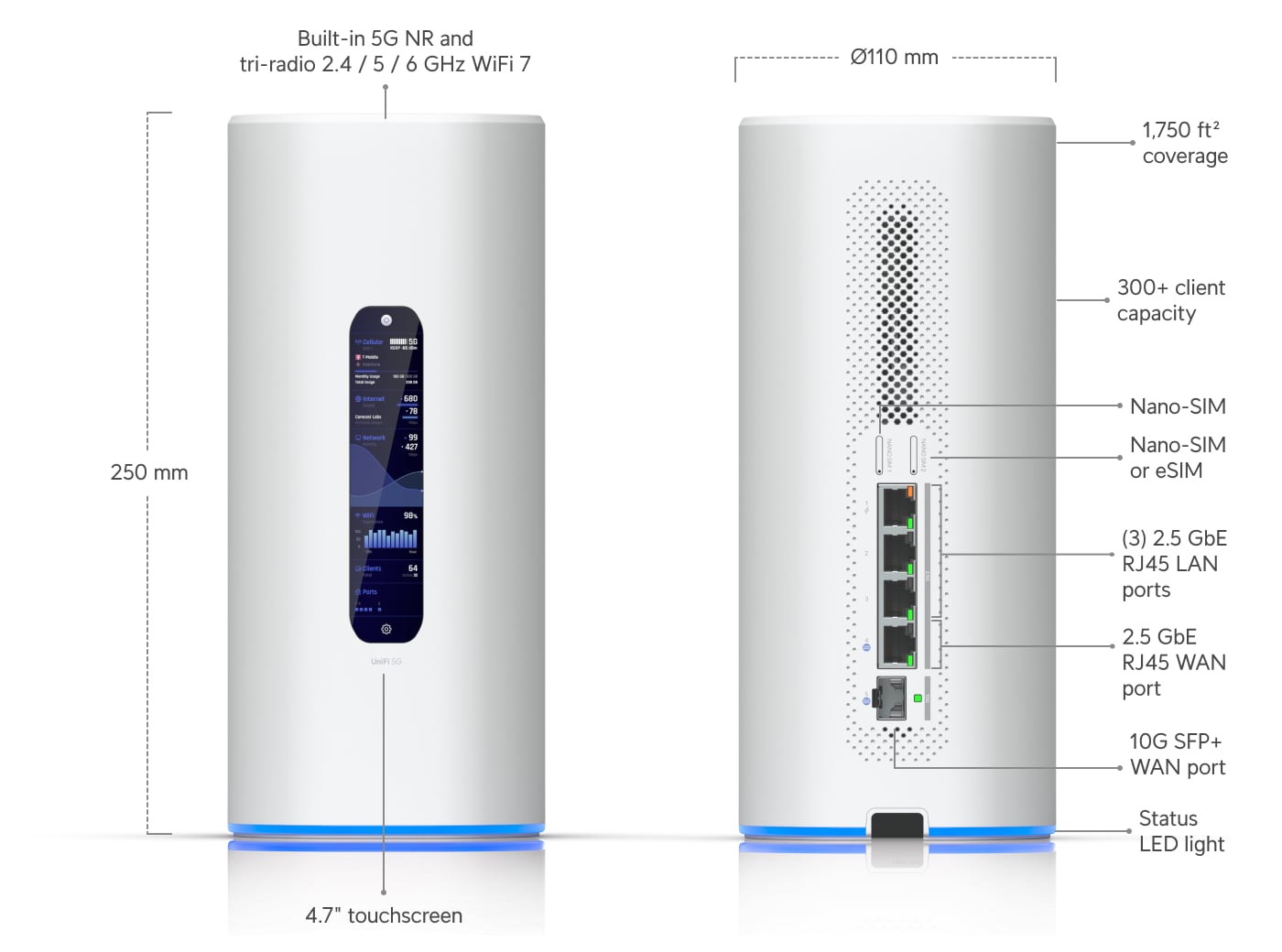
Overview: The UniFi Dream Router 5G Max (UDR-5G-Max) is a UniFi OS-based cloud gateway that consolidates routing, firewall enforcement, Wi-Fi 7 wireless access and cellular WAN redundancy into a single desktop appliance at the network edge. With 10G SFP+ and 2.5GbE RJ45 WAN uplinks, 5G NSA/SA and 4G LTE cellular connectivity, four 2.5GbE LAN ports (one PoE) and up to 2.3 Gbps of IDS/IPS processing capacity, it delivers end-to-end connectivity continuity for branch offices, temporary field deployments, retail sites and locations where fibre access is not yet available.
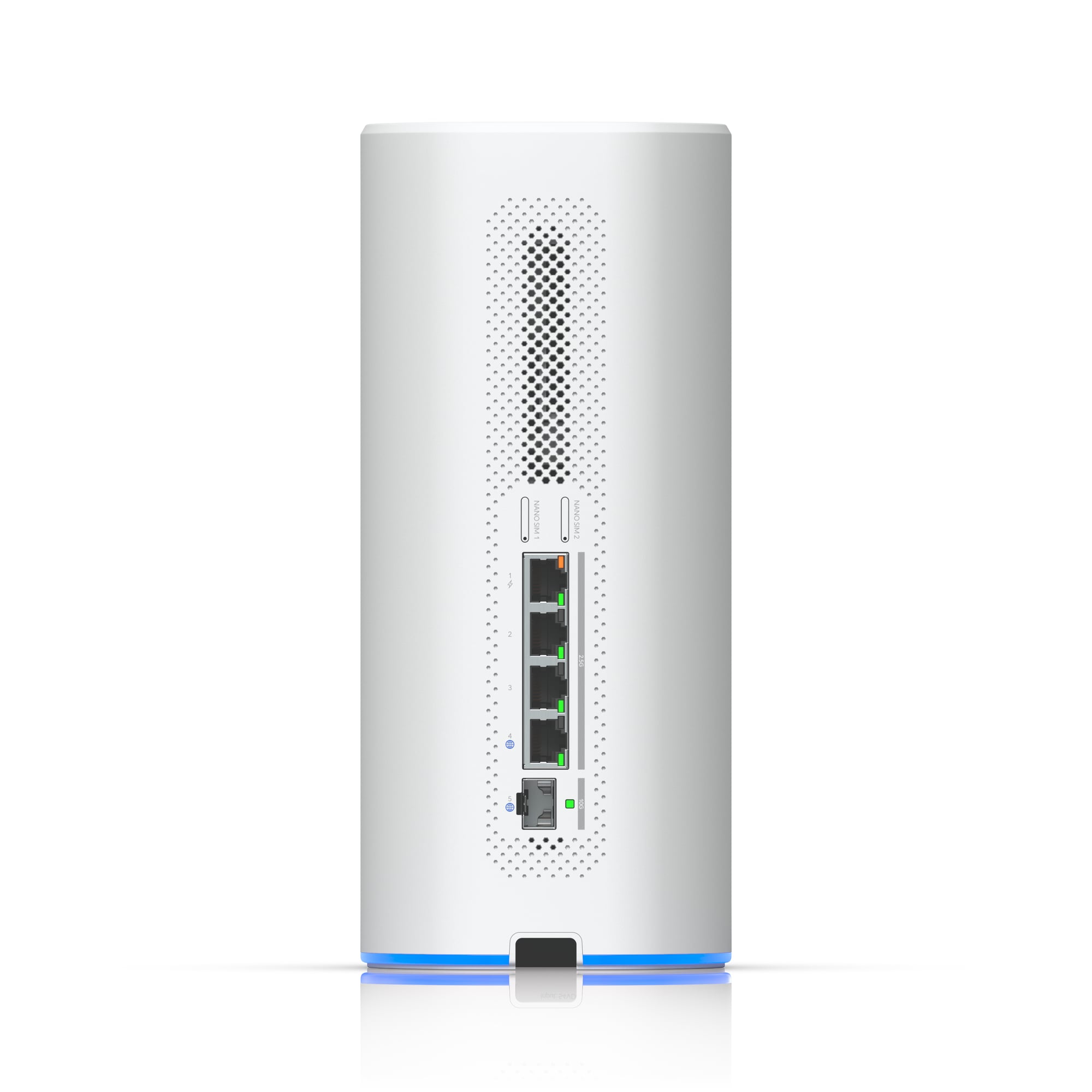
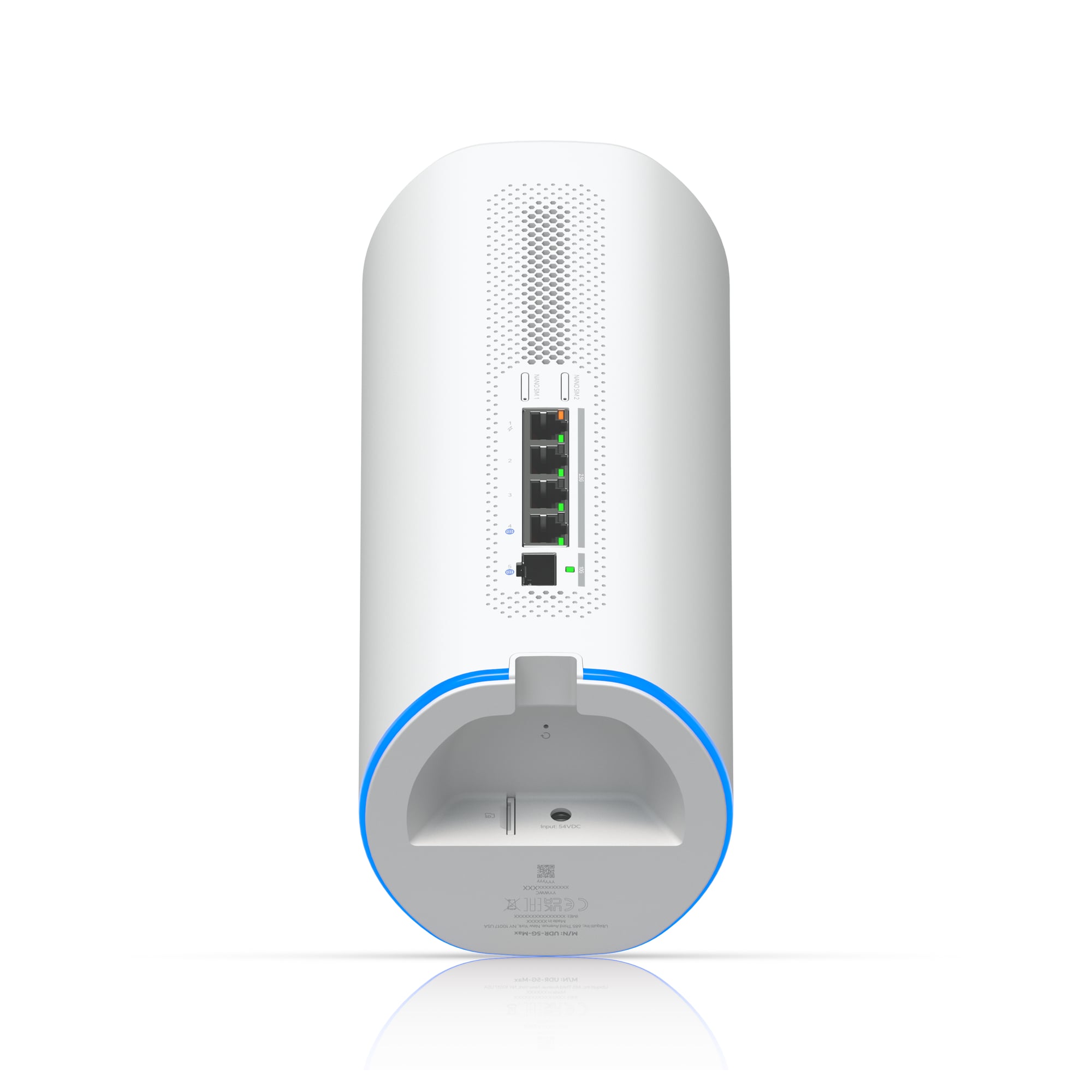
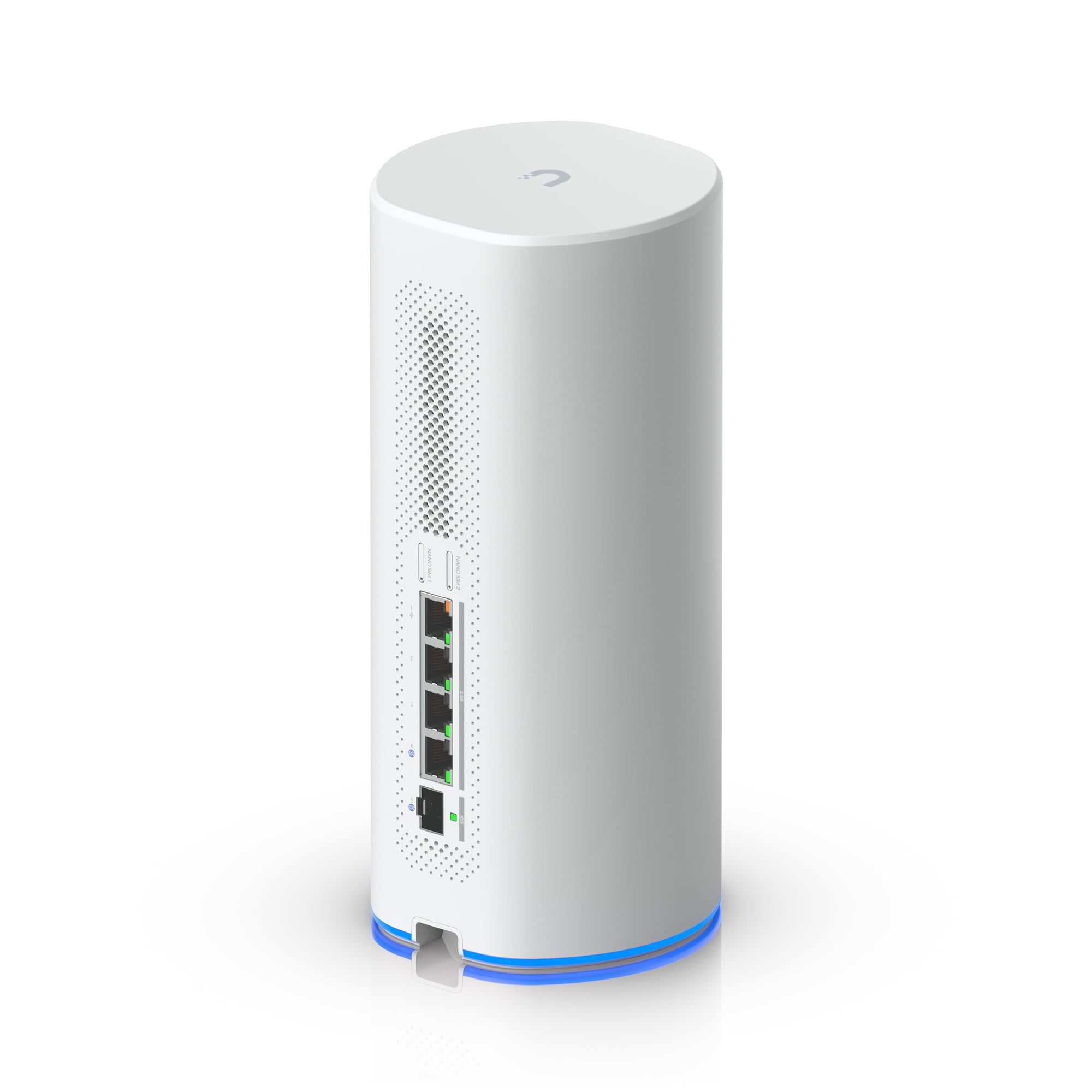
Description: The hardware architecture of the UDR-5G-Max is designed to establish a multi-layer network backbone in a single device. On the routing side it provides one 10G SFP+ and one 2.5GbE RJ45 default WAN interface, and the total WAN port count can scale to four, enabling multi-ISP load balancing, active-standby line architectures and policy-based path selection. The LAN side offers four 2.5G/1G/100M auto-negotiating RJ45 ports; one of them delivers PoE output and can directly power a UniFi Access Point, IP camera or access control terminal, removing the need for a separate injector. The wireless subsystem operates on the 802.11be (Wi-Fi 7) standard across three bands: the 2.4 GHz, 5 GHz and 6 GHz radios are configured as 2x2 DL/UL MU-MIMO, with antenna gains of 8 dBi at 6 GHz, 5 dBi at 5 GHz and 4 dBi at 2.4 GHz, and maximum transmit power of 22/26/23 dBm respectively, targeting high throughput and low latency in dense client environments. Channel widths up to 320 MHz and modulation up to MCS13 support wireless data rates up to 5.7 Gbps on the 802.11be side, while the stated 160 m² (1,750 ft²) coverage area provides a realistic design boundary for single-unit deployments in open offices and retail floors.
Cellular capability is the defining element of the product's enterprise positioning. The device reaches 3.4 Gbps downlink / 560 Mbps uplink in 5G NSA mode, 1.8 Gbps downlink / 650 Mbps uplink in 5G SA mode and 1.6 Gbps downlink / 210 Mbps uplink in 4G LTE mode. On the LTE side it supports an extensive band matrix covering B1, B2, B3, B4, B5, B7, B8, B12, B13, B14, B18, B19, B20, B21, B25, B26, B28, B29, B30, B32, B34, B38, B39, B40, B41, B42, B43, B46, B48, B66 and B71, complemented by 3G UMTS support on B1, B2, B4, B5, B8 and B19. HPUE power class 2 compliance at 25 dBm transmit power improves uplink stability at cell edges and under weak signal conditions. This combination enables cellular failover in branches with primary fibre links that require outage tolerance, and allows 5G to serve as the primary WAN at construction sites, trade shows, agricultural fields and mobile event locations where fixed-line infrastructure is absent. The UDR-5G-Max-EU variant is configured for European cellular band and regulatory requirements.
The security and traffic management layer is operated centrally within UniFi OS. A stateful firewall, application-aware Layer 7 firewall, deep packet inspection (DPI) and traffic identification, zone-based advanced filtering (regions, domains, applications), content filtering, ad blocking and a signature-based IPS/IDS engine are unified under a single policy set, and 2.3 Gbps of processing capacity is preserved with IDS/IPS enabled. This means a full 1 Gbps WAN link can be used while every flow is inspected for threats. On the wireless security side, WPA-PSK, WPA-Enterprise and WPA/WPA2/WPA3/PPSK transition modes are supported, and 4 BSSIDs per radio allow corporate, guest and IoT segmentation to be separated at the SSID level. VLANs, SSID-to-VLAN mapping, per-network firewall rules and central provisioning through UniFi Network maintain a consistent configuration standard across branch and campus sites.
The management model is built for multi-site enterprise environments. The device runs UniFi OS, and the UniFi Network application provides a single console for device inventory, topology visibility, client monitoring, traffic analytics, DPI reporting and firmware lifecycle management. Local controller mode supports operation independent of internet availability at field sites, while central UniFi cloud management delivers policy distribution across multiple branches from one pane. Inter-VLAN routing, DHCP, NAT, port forwarding and dynamic routing requirements are served on-device; when paired with UniFi access points, seamless roaming and band steering behaviour are managed as a single wireless layer. The desktop form factor allows quiet, rapid deployment in branches without rack infrastructure, hotel lobbies, clinic and retail back offices, while 5G and 4G redundancy preserve business continuity during WAN outages.
Key Highlights:
- 802.11be (Wi-Fi 7) tri-band radio: 2.4 GHz, 5 GHz and 6 GHz; 2x2 DL/UL MU-MIMO
- 8 dBi antenna gain and 22 dBm transmit power at 6 GHz for a high-capacity wireless layer
- 5G NSA (3.4 Gbps / 560 Mbps), 5G SA (1.8 Gbps / 650 Mbps) and 4G LTE (1.6 Gbps / 210 Mbps) cellular WAN support
- 30+ LTE bands plus 3G UMTS B1/B2/B4/B5/B8/B19; HPUE power class 2 (25 dBm) transmit power
- 1x 10G SFP+ and 1x 2.5GbE RJ45 default WAN; up to four WAN ports
- 4x 2.5G/1G/100M RJ45 LAN ports, one with PoE output
- 2.3 Gbps security processing capacity with IDS/IPS enabled
- Stateful firewall, application-aware Layer 7 firewall, DPI, zone-based advanced filtering, content filtering and ad blocking
- WPA-PSK, WPA-Enterprise, WPA/WPA2/WPA3/PPSK; 4 BSSIDs per radio
- Centralised management, multi-site provisioning and analytics via UniFi OS and UniFi Network
- 160 m² (1,750 ft²) coverage area in a desktop form factor
Technical Specifications:
| Parameter | Value |
|---|---|
| Model | UDR-5G-Max (UDR-5G-Max-EU) |
| Form factor | Desktop |
| Coverage area | 160 m² (1,750 ft²) |
| Wireless standard | 802.11be (Wi-Fi 7), compatible with 802.11ax (Wi-Fi 6/6E) and 802.11ac (Wi-Fi 5) |
| Radios | 2.4 GHz / 5 GHz / 6 GHz — 2x2 (DL/UL MU-MIMO) |
| Antenna gain | 6 GHz: 8 dBi · 5 GHz: 5 dBi · 2.4 GHz: 4 dBi |
| Max. TX power | 6 GHz: 22 dBm · 5 GHz: 26 dBm · 2.4 GHz: 23 dBm |
| Data rates (802.11be) | 7.3 Mbps – 5.7 Gbps (MCS0–MCS13, NSS1/2, EHT 20/40/80/160/240/320) |
| Data rates (802.11ax) | 7.3 Mbps – 2.4 Gbps (MCS0–MCS11, NSS1/2, HE 20/40/80/160) |
| Wireless security | WPA-PSK, WPA-Enterprise (WPA/WPA2/WPA3/PPSK) |
| Max. BSSIDs | 4 per radio |
| Default WAN ports | (1) 10G SFP+, (1) 2.5GbE RJ45 |
| Max. WAN port count | 4 |
| LAN ports | 4x 2.5G/1G/100M RJ45 (1 PoE) |
| SFP+ port | 1x 10G/1G |
| IDS/IPS throughput | 2.3 Gbps |
| Firewall | Stateful firewall, application-aware Layer 7 firewall, zone-based advanced filtering |
| Traffic management | DPI and traffic identification, content filtering, ad blocking |
| Threat prevention | Signature-based IPS/IDS |
| 5G NSA speed | Downlink 3.4 Gbps / Uplink 560 Mbps |
| 5G SA speed | Downlink 1.8 Gbps / Uplink 650 Mbps |
| 4G LTE speed | Downlink 1.6 Gbps / Uplink 210 Mbps |
| LTE bands | B1, B2, B3, B4, B5, B7, B8, B12, B13, B14, B18, B19, B20, B21, B25, B26, B28, B29, B30, B32, B34, B38, B39, B40, B41, B42, B43, B46, B48, B66, B71 |
| 3G UMTS bands | B1, B2, B4, B5, B8, B19 |
| Max. cellular TX power | HPUE power class 2 — 25 dBm |
| Management | UniFi OS / UniFi Network (local controller and central cloud management) |